Visas & Paperwork
What to Scan, What to Keep on Paper
Copies solve some paperwork problems and none of the ones that require an original, so the useful discipline is knowing which documents belong in which form.

New arrivals photograph everything and then discover that photographs satisfy almost none of the offices that matter. Both forms are necessary and they do different work.
What an original actually proves
An original carries physical security features that a copy does not reproduce: paper stock, printing, seals and sometimes embedded elements. Verification at a counter frequently depends on those.
Agencies that hold you to a specific document are usually protecting against forgery rather than against inconvenience, which is why the requirement is not waived on request.
This is also why some documents must be surrendered or presented in person, and why no digital archive removes the need to store the paper safely.
Where a copy is genuinely sufficient
Copies are used for reference and for completing forms, and for the many situations where an organisation is recording details rather than verifying identity.
They are also the basis for replacing a lost original, because a reissue application usually asks for the document number, the date and the place of issue, all of which sit on the copy.
For anything sent to an attorney or an employer, a clear scan is normally what is requested, and sending originals by post is the mistake to avoid.
Certified copies are a third category
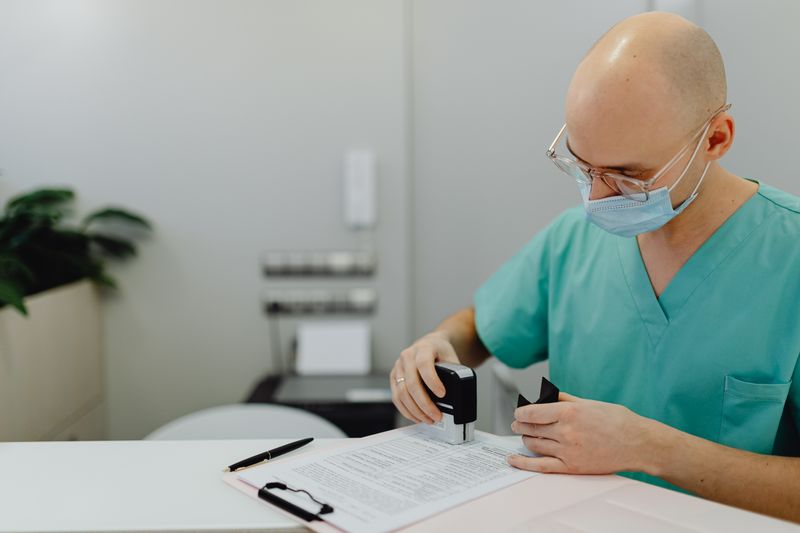
A certified copy is attested by an authorised person or by the issuing body as a true copy of the original. It is not a photocopy and it is not the original.
Different offices ask for different forms of certification, including notarisation and apostilles, and which one is needed depends on the receiving body rather than on the document.
Because the process is far easier in the country of issue, obtaining several certified copies of Indian documents before leaving is one of the highest-value preparations available.
How to organise the digital archive
The archive should be readable without the device you normally carry, because the scenario it exists for often involves losing that device along with everything else.
Encryption matters here, since the collection amounts to a complete identity file. A single unprotected folder in a shared account is a genuine exposure.
Naming conventions sound trivial and are not. Files named by document type and date are findable under pressure; files named by camera timestamp are not.
Storing the paper
Originals should be in one place, dry, flat and not carried routinely. The folder you take to appointments should hold copies, with originals added deliberately when a specific office requires them.
Where a household holds documents for several people, one nominated location prevents the situation where nobody is sure who last had a passport.
A fireproof box or a bank safe deposit box covers the low-probability events. The higher-probability event is simply misplacing something during a move, which organisation alone prevents.
Questions readers ask
Do all family members' statuses change together?
Not necessarily. Positions held on different bases can change independently. What applies to your household depends on the specific documents, which is why professional review matters.
Should each person really have a separate file?
Yes. Requests almost always concern one individual, and a combined folder means searching through everybody's papers under time pressure.
Also by Sheetal Rane
- How to Read a Government Website Without Being Misled by a ForumVisas & Paperwork
- What an Employer Actually Controls in a Sponsored Case, and What It Does NotVisas & Paperwork
- What Actually Happens at a Port of EntryVisas & Paperwork
- Why So Much of Immigration Is Discretionary and What That Means for PlanningVisas & Paperwork