Money & Credit
Instant Payment Apps and Why the Money Cannot Be Recalled
American instant transfer systems settle immediately and irreversibly between accounts, which makes them convenient between people who know each other and dangerous with strangers.

Instant person-to-person transfers have become ordinary in American life, and their defining property is that they finish. Once sent, the money has moved, and there is usually no mechanism to pull it back.
Finality is the feature, not a flaw
These systems move value between accounts and complete the transfer rather than holding it provisionally, which is what allows the recipient to use the funds immediately.
That immediacy is only possible because there is no pending period during which a sender can change their mind. Speed and reversibility are trading against each other.
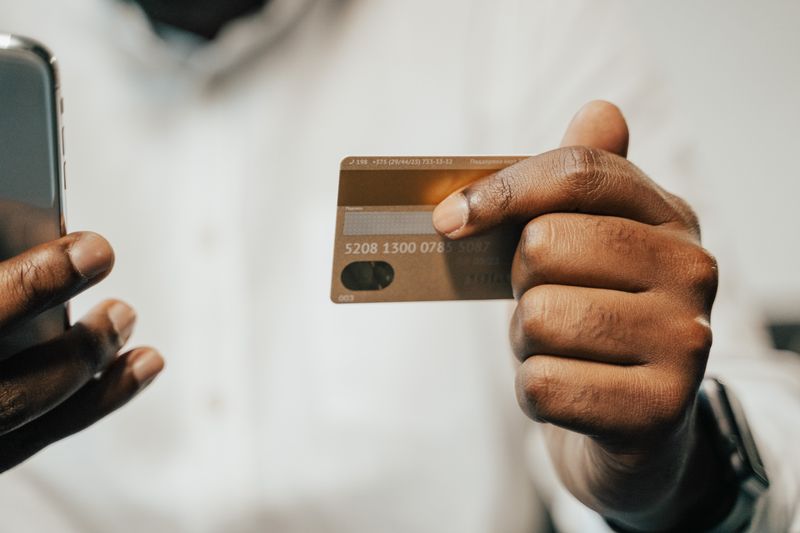
Card payments behave differently precisely because they are provisional for a period, which is what makes a dispute process possible at all.
Fraud protection is weaker where you authorized the payment
Protections in American payments generally distinguish between a transfer you did not authorize and one you were persuaded to make. The second is far harder to recover.
Scams are built directly on this distinction. The objective is to get the victim to send the money themselves, because a voluntary transfer sits outside most reversal mechanisms.
Protections and dispute rules differ between institutions and services and change over time, so your own bank's current terms are the only reliable statement of what applies.
Recent arrivals are targeted deliberately
Scams aimed at immigrants commonly combine an urgent claim about a government matter with an instruction to pay immediately through a channel that cannot be reversed.
The payment method is itself the strongest signal. Legitimate agencies do not resolve matters through an instant transfer to an individual account, and no genuine process requires payment within minutes.
Urgency and secrecy are the two consistent tells, and both exist to prevent the target from taking the hour that would expose the pretense.
The recipient identifier is the weak point
Transfers usually key off a phone number, an email address or a handle rather than a verified name, and a single mistyped character can send funds to a stranger.
Recovery in that situation depends on the goodwill of the person who received it, because the transfer was authorized and executed exactly as instructed.
Sending a nominal amount first when paying someone new, then the balance, is the common practical safeguard against this specific failure.
Different rails suit different transactions
Instant transfers suit payments between people who know each other, where trust already exists and reversal would never be needed.
Purchases from strangers are better served by methods that carry a dispute process, and the small cost of that protection is what it buys.
A seller who insists on an irreversible method for a transaction where a card would be normal is telling you something useful about the transaction.
Questions readers ask
How long before I have a usable score?
Most scoring models need several months of reported activity, and lenders often want longer than the minimum. Expect the first year to be about establishing existence rather than optimising a number.
Will checking my own credit report hurt my score?
No. Checking your own file is treated differently from an application enquiry, and reviewing it regularly is a sensible habit.
Also by Ishaan Kaushik
- Why Your First Week Is a Dependency Chain and Not a ChecklistThe First Months
- Why Almost Every American Form Asks for a Social Security NumberThe First Months
- Choosing an Immigration Attorney and Preparing for the First MeetingVisas & Paperwork
- Why Published Processing Times Behave Like a Queue and Not a PromiseVisas & Paperwork