Community & Culture
Celebrating Festivals Nine Thousand Miles From the People You Celebrate With
Diaspora festivals are recognisably the same and structurally different, moved to weekends and rebuilt by people who are not your family. Both facts take getting used to.

Most explanations of observing Indian festivals abroad stop at the point where it starts to matter. This one carries on.
The short version
- Festivals move to the nearest weekend out of practical necessity.
- Community organisations do the work that families do at home.
- Fireworks and open flames are restricted in many places.
What changes structurally
Indian festivals fall on days determined by a calendar that takes no account of American working weeks, so celebrations move to the nearest weekend. That shift is jarring the first time and quickly becomes normal, though it does separate the observance from the actual day. The work of organising, which at home is distributed across an extended family and a neighbourhood, falls to community organisations and volunteers.
Celebrations are therefore scheduled events you attend rather than an atmosphere the whole city is producing around you. The absence of that ambient participation is what most people describe as the real difference rather than anything about the event itself.
Where celebrations happen
Temples, gurdwaras, mosques and churches serving the diaspora organise the largest observances and welcome newcomers as a matter of course. Cultural associations, regional societies and university student groups run their own events, often with a specific linguistic or regional character. Many American cities host large public celebrations of major festivals, which are as much civic events as religious ones.
In the first year, employers increasingly mark major festivals, and some offer floating holidays that can be used for observances not on the public calendar. Finding these in your first year usually requires asking rather than searching, since much of it circulates through group chats and noticeboards.
The practical restrictions
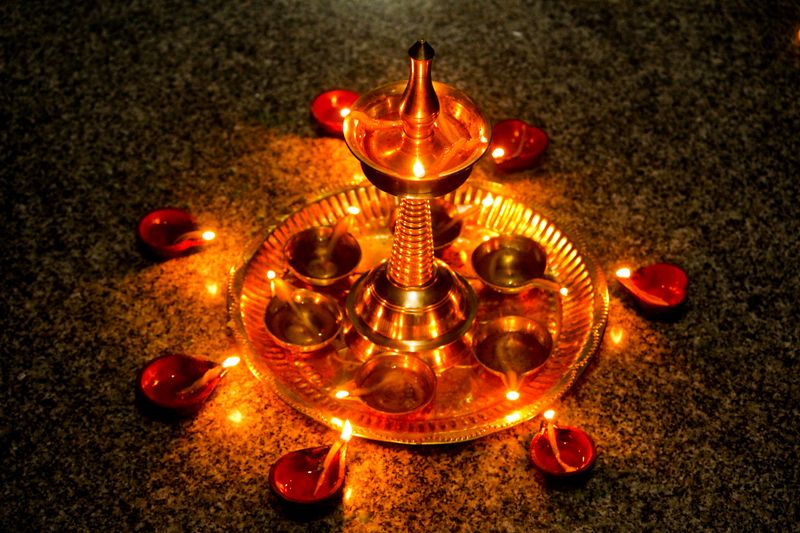
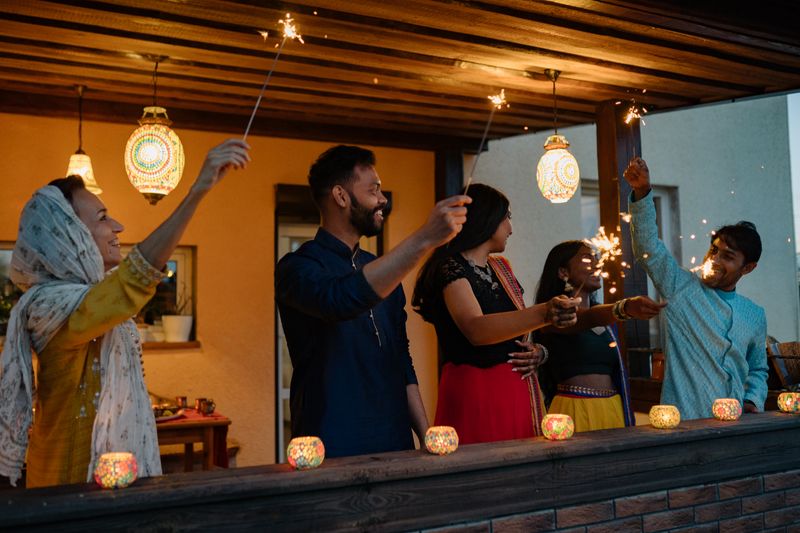
Fireworks are regulated by state and city and are prohibited or restricted in many places, which changes some celebrations substantially. Open flames including lamps are restricted in many rental buildings, and battery lamps have become the widespread substitute. Noise ordinances and neighbour expectations mean late celebrations in residential buildings need a word with neighbours beforehand.
At the counter, colour used at spring festivals stains, and outdoor community events exist partly because of what happens to a rented flat otherwise. Checking your building's rules before an event is easier than an unpleasant conversation with a management company afterwards.
Building your own version
People who do best invent a version that fits their actual life rather than attempting an exact reproduction of home. Cooking one specific dish, lighting lamps at the flat, and calling family at their morning becomes its own ritual quickly. Inviting non-Indian colleagues and friends is common and is usually received with genuine enthusiasm.
Explaining a festival to somebody who knows nothing about it is a surprisingly good way of reconnecting with what it means.
Children raised here experience the diaspora version as the real one, which is worth thinking about deliberately rather than by default.
The hard days
The first major festival away from home is a reliably difficult day for almost everybody, and expecting that helps. Video calls into a house full of people can intensify the feeling as easily as relieve it, and a shorter call is sometimes better.
In the first year, being around other people, even at an event you find slightly artificial, is generally better than being alone with the day. Sending gifts and money home is a real form of participation and is worth planning far enough ahead that it arrives on time. The second year is markedly easier, largely because you have a version of your own by then.
Time and the calendar
The time difference means the festival happens at home while you are asleep or at work, which is its own small dislocation. Booking leave around major festivals well ahead is worth doing, since American workplaces do not anticipate these dates. Some people plan visits home around a specific festival every few years, which gives the calendar an anchor.
Two winters in, sharing a calendar of dates with your employer at the start of the year makes leave requests easier and educates a workplace. Marking the dates for yourself matters, because a festival can pass unnoticed in a life that has no external reminders of it.
The takeaway
Build a version that fits the life you actually have here. This article is general information.
The first year is administration. The second one is where the life starts.
Questions readers ask
How do I find community celebrations in a new city?
Local temples and gurdwaras, university cultural societies and regional associations are the usual routes, and much of it circulates through community group chats. Asking a colleague is faster than searching.
Will my employer give me the day off?
Some offer floating holidays that can be used for this, and others expect you to use ordinary leave. Ask early in the year rather than the week before.
Also by Ishaan Kaushik
- Why Your First Week Is a Dependency Chain and Not a ChecklistThe First Months
- Why Almost Every American Form Asks for a Social Security NumberThe First Months
- Choosing an Immigration Attorney and Preparing for the First MeetingVisas & Paperwork
- Why Published Processing Times Behave Like a Queue and Not a PromiseVisas & Paperwork